Blind Test: Wandrd Prvke V4 vs Sigma 12Mm F 1 4 Dc C - Which is Actually Better?
Introduction
In the overlapping world of camera bags and lenses, direct comparisons can feel mismatched — a backpack versus a lens — but a blind test framed around real-world photographic workflows reveals how complementary gear choices shape results. This article puts the Wandrd Prvke V4 (a popular camera backpack) and the Sigma 12mm f/1.4 DC Contemporary (an ultra-wide, fast prime for APS-C systems) under practical scrutiny. The goal is not to crown a single "winner" across categories but to show how each product performs for typical buyers: travel photographers, landscape shooters, night-sky enthusiasts, and content creators who rely on portability, build quality, and optical performance.
How the Blind Test Was Framed
The blind test is conceptual rather than literal: scenarios were selected that photographers commonly encounter — airport carry-on constraints, muddy trail access, urban architecture shoots, and low-light astrophotography — and evaluated independently for how the Wandrd Prvke V4 and the Sigma 12mm f/1.4 DC C affect the experience and final images. The emphasis is on practical trade-offs: comfort and protection for the bag, and sharpness, distortion, and coma control for the lens. Readers are guided to consider fit-for-purpose rather than looking for an absolute "better" product.
Wandrd Prvke V4 — Detailed Review and Analysis
The Wandrd Prvke series has been positioned as a versatile, travel-friendly camera backpack. The V4 iteration continues that lineage with refinements aimed at photographers who need fast access, strong weather resistance, and modular organization. In real-world use, the Prvke V4 tends to appeal to hybrid shooters who mix camera gear with daily essentials — laptops, a change of clothes, and accessories for all-day outings.
Design and Accessibility
One of the Prvke V4's defining features is quick access to gear. Side and top entries allow photographers to reach camera bodies and lenses without taking the bag off completely, which is valuable on guided tours or during time-limited golden hour sessions. The layout typically includes a padded laptop sleeve and configurable interior dividers, which accommodate multiple camera bodies and long lenses or the separate camera cube accessories that some buyers prefer for heavy duty protection.
Comfort and Carrying
Ergonomics matter on long walks: the Prvke V4 is intended to distribute weight comfortably across the shoulders and hips, with breathable back panels and adjustable straps. For landscape hikes where photographers may carry both the pack and a tripod, practical tripod attachment points and stable harnessing are useful. Travel photographers frequently note that what feels comfortable while walking empty may feel different when loaded with 8–12 kg of gear; the V4's padding and chassis aim to reduce shoulder fatigue over longer days.
Weather Protection and Durability
Photographers who shoot in mixed or poor weather value reliable weather resistance. The Prvke V4 generally offers robust exterior materials and a highly water-resistant coating, coupled with seam treatments and a roll-down closure or integrated rain cover on many builds. This makes it suitable for coastal sunrise sessions, dusty desert shoots, and sudden downpours during travel.
Organization and Practicality
The V4's internal organization supports quick lens swaps and separation of fragile items. External pockets for filters, cables, and small accessories keep frequently used items within reach. For those who travel frequently, the bag's carry-on compatibility — while never guaranteed for every airline model — usually aligns with common personal-item dimensions, making it convenient for plane-side shoots and city trips.
Who the Prvke V4 Suits
- Travel photographers and content creators who need a hybrid daily/travel bag
- Photographers who prioritize fast access and organization over minimalism
- Users who require a weather-resistant pack with room for a laptop and clothes
Pros & Cons — Wandrd Prvke V4
- Pros:
- Thoughtful access options (top and side) that speed up lens changes
- Modular internal layout that secures varied gear configurations
- Solid weather resistance for mixed conditions
- Comfort-oriented harnessing for longer carries
- Cons:
- Can feel bulky when used as a minimalist daypack
- Higher-end features add cost compared with basic camera bags
- Not all airline carry-on restrictions are guaranteed — checking dimensions helps
Sigma 12mm f/1.4 DC C — Detailed Review and Analysis
The Sigma 12mm f/1.4 DC Contemporary is an ultra-wide, fast-aperture prime designed for APS-C cameras. Lenses in this class target landscape, architecture, interior, and astrophotography use cases where field of view and low-light capability are critical. The 12mm focal length on an APS-C body gives an equivalent field of view in the high teens (roughly 18mm on a 1.5x crop), making it wider than most standard wide angles and allowing dramatic compositional choices.
Find top-rated Cameras & Photography products at great prices.
Browse Now →Optical Performance
For buyers, the most important optical considerations are sharpness, edge-to-edge performance, coma, vignetting, distortion, and flare handling. In practice, the Sigma 12mm f/1.4 DC C shines in center sharpness at f/1.4, which is useful for low-light and astrophotography where stopping down is not always desirable. Edge performance typically improves by f/2.8–f/4, and many users stop down slightly to balance sharpness across the frame for landscape work.
Low-Light and Astrophotography
A wide f/1.4 aperture on an ultra-wide lens is a rare combination that benefits night-sky photographers: faster exposures, lower ISO settings, and more control over star trailing. Coma control (the tendency of point light sources to stretch into comet-like shapes at the edges) becomes a determining factor; lenses in this category that manage coma well produce cleaner star points to the corners, reducing the need for heavy post-processing corrections.
Autofocus and Handling
Autofocus performance on modern Sigma Contemporary lenses is usually competent and quiet, which suits run-and-gun shooting and video. Manual focus override and focus rings should be smooth enough for critical focus pulls during night shoots. For architectural and interior work, precise focus at ultra-wide distances is important, though many photographers rely on hyperfocal techniques instead of micro-adjustments.
Build and Portability
The Sigma 12mm f/1.4 DC C aims to balance optical performance with manageable size. Buyers often appreciate lenses they can carry all day without causing excessive neck fatigue. The lens' weather sealing and ruggedness matter for landscape photographers who shoot near spray, dust, or humidity — features that extend the lens' usable life in demanding conditions.
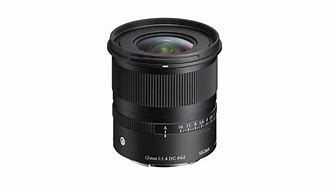
Who the Sigma 12mm f/1.4 DC C Suits
- Night-sky and astrophotography enthusiasts needing fast aperture and wide coverage
- Landscape and cityscape shooters wanting dramatic foreground-to-background perspective
- Video creators looking for an ultra-wide field of view with shallow depth-of-field control
Pros & Cons — Sigma 12mm f/1.4 DC C
- Pros:
- Exceptionally wide field of view on APS-C bodies for immersive compositions
- Very fast f/1.4 aperture that aids low-light and creative depth control
- Strong center sharpness wide open; improved edge performance when stopped down
- Well-suited to astrophotography when coma is well controlled
- Cons:
- Ultra-wide perspective can be challenging for tight interior spaces
- Some vignetting and edge softness is typical at the widest aperture
- No in-body stabilization — handheld night shots depend on camera bodies or higher ISO
Comparison Table
| Feature | Wandrd Prvke V4 (Backpack) | Sigma 12mm f/1.4 DC C (Lens) |
|---|---|---|
| Primary purpose | Carry, protect, and organize camera gear and daily essentials | Ultra-wide-angle capture for APS-C cameras; low-light and astrophotography |
| Best for | Travel photographers, hybrid users, day-to-day shoots | Landscape, night-sky, architecture, and wide-angle video |
| Portability | Designed for long carries with padded harness and modular interior | Relatively compact for the aperture class; carried on-camera or in a bag |
| Weather resistance | High — water-resistant materials and design | Depends on model; often robust but photographers may prefer extra care in harsh elements |
| Impact on workflow | Speeds access to gear and keeps items organized for quick setup | Expands creative options with ultra-wide views and better low-light shooting |
| Value for typical buyer concerns | High for those who need organized, weatherproof transport | High for those needing ultra-wide, fast optics for low-light work |
Real-World Use Cases and How Each Product Changes the Outcome
Considering specific scenarios clarifies which item contributes most to a given photographic problem:
1. Travel Photography on a Tight Schedule
When time is limited and mobility is prioritized, the Wandrd Prvke V4 influences the shoot more than the lens choice. Fast access and carry-on compatibility allow quick lens swaps and the ability to keep a camera ready for street scenes. The Sigma lens, if mounted, expands framing possibilities but carries little advantage if the bag prevents rapid access or makes gear retrieval awkward.
2. Landscape and Foreground-Heavy Compositions
For sweeping landscapes that include dramatic foregrounds, the Sigma 12mm provides the perspective necessary to exaggerate scale and foreground detail. The Prvke V4 keeps multiple lenses and filters organized for varied compositions and protects gear on muddy trails. Both items contribute: the bag enables bringing the lens into remote places comfortably; the lens shapes the image.
Shop the latest Cameras & Photography picks on Amazon.
See Deals →3. Astrophotography Sessions
Here the Sigma lens often takes center stage. Low-light capability and wide coverage reduce exposure times and allow capturing more sky. The backpack's role is logistical — carrying tripods, warm clothing, and spares. A mismatch (e.g., a compact bag with insufficient tripod space) can impede a night shoot even if the lens excels optically.
4. Urban Architecture and Interior Work
Ultra-wide optics from the Sigma help with confined spaces and dramatic interiors, but distortion control is critical to achieve rectilinear lines. Meanwhile, the Prvke V4 offers protection for delicate tilt-shift accessories or extra lenses, and its quick-access pockets speed up swaps between wide and normal lenses during on-location shoots.
Buying Guide — What to Prioritize
Choosing between a camera bag and a lens is not mutually exclusive; both are investments in workflow and output. The buying decision should align to the photographer’s typical shooting conditions and most common pain points. The following checklist helps prioritize features when evaluating the Wandrd Prvke V4 and the Sigma 12mm f/1.4 DC C.
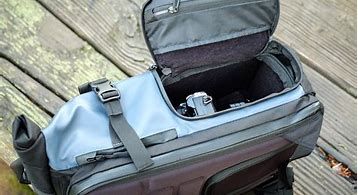
For the Wandrd Prvke V4
- Access pattern: Determine whether side/top or back access fits shooting habits. Fast side access matters for street and event work; top access suits travel packing.
- Capacity vs. size: Balance how much gear is usually carried against airline and comfort constraints. Too much unused space means unnecessary bulk.
- Comfort features: Look for padded shoulder straps, ventilated back panels, and a sternum/waist strap if hikes are common.
- Weather protection: If shoots occur in rain or near water, prioritize water-resistant materials and a reliable rain cover.
- Organization: Check divider layouts, laptop sleeve fit, and pocket placement — these directly impact how fast gear is accessed.
For the Sigma 12mm f/1.4 DC C
- System compatibility: Confirm mount compatibility and whether the field-of-view suits the camera’s crop factor (roughly 1.5x–1.6x).
- Optical priorities: Decide whether low-light speed, center sharpness, or edge-to-edge uniformity is most important. For astrophotography, coma and star rendering are key.
- Portability: Consider how often the lens will be carried on-camera versus in a bag — weight and size matter for all-day shoots.
- Filter and accessories: Ultra-wide lenses may not accept standard front filters; check whether filter systems or rear filters are required for in-field ND or polarizers.
- Budget and alternatives: Compare value against other ultra-wide primes and consider whether stopping down or combining with other lenses meets needs more economically.
Practical Tips for Buyers
- For those prioritizing travel agility, test the bag fully loaded with the most common gear; comfort only becomes apparent in use.
- Photographers planning night-sky work should test the lens at f/1.4 and f/2.8 to assess coma and edge star-shape performance on the intended camera body.
- When combining both purchases, check how the lens fits in the bag with a camera attached and whether tripod mounts interfere with internal organization.
- Read reviews from photographers who shoot in similar environments (coastal, alpine, urban) to validate weatherproofing and optical characteristics under comparable conditions.
- Consider long-term service and warranty policies for both bag and lens, especially for international travel and heavy use.
Conclusion
The Wandrd Prvke V4 and the Sigma 12mm f/1.4 DC Contemporary each answer different — but complementary — problems for photographers. The Prvke V4 excels where organization, weather resistance, and quick access define the shooting day, translating to fewer missed moments and less gear fatigue. The Sigma 12mm f/1.4 DC C stands out where field of view and low-light speed change what is photographically possible, enabling expansive compositions and more effective night-sky captures.
Rather than asking which is absolutely better, a more useful question for most buyers is how each product aligns with their needs. For travel and hybrid workflows, the Prvke V4 can transform how comfortably and reliably equipment is transported. For creative optical reach and low-light performance, the Sigma 12mm opens compositional possibilities that wider zooms and slower primes cannot. For photographers who frequently operate in the field, investing in both — a dependable pack and a lens that extends creative options — often yields the greatest practical improvement to outcomes.