Difference Between Viltrox Af 28Mm F 4 5 and Sjcam C400 Explained
Introduction
The Viltrox AF 28mm f/4.5 and the SJCAM C400 occupy very different places in a photographer’s and videographer’s toolkit. One is an interchangeable camera lens designed to be a component of a system built around a mirrorless or DSLR body; the other is a compact action camera intended to capture ready-to-use video and stills in rugged, first-person scenarios. Comparing them side-by-side requires more than a list of specifications: it calls for an understanding of intended use, ecosystem trade-offs, ergonomic differences and the kinds of images each product makes easiest to produce. This article breaks down those differences, analyzes strengths and weaknesses, and helps readers identify which product matches specific real-world needs.
What these products are, at a glance
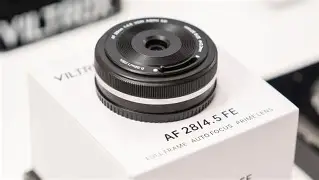
Viltrox AF 28mm f/4.5 is an autofocus prime lens whose name indicates a 28mm focal length and a relatively modest maximum aperture of f/4.5. As a lens, it is intended to be mounted on a compatible camera body and depends on the body’s sensor, processor, and features (autofocus algorithms, stabilization, ISO performance) to deliver the final image.
SJCAM C400 is an all-in-one action camera: a self-contained device with lens, sensor, processor, battery and storage that emphasizes portability, durability, and ease of capture in motion-heavy environments. Action cameras are typically employed for POV shots, sports, travel vlogging, and situations where mounting flexibility and ruggedness matter more than interchangeable optics.
Detailed product analysis
Design philosophy and intended users
The Viltrox lens follows a system-based approach: buyers choose a camera body and accessory ecosystem and add optics to tailor focal length, optical character and creative control. This lens will appeal to photographers who prioritize image quality, manual control, and compatibility with a mirrorless or DSLR camera. It suits street photographers, landscape shooters seeking a discrete wide-ish prime, and photographers who want to pair specific lens rendering with high-resolution sensors.
The SJCAM C400, conversely, is designed for immediacy. It is for users who need a compact, mountable device that captures decent video and stills with minimal setup. This device tends to attract action-sports enthusiasts, travel vloggers who need hands-free capture, and anyone who films in environments where an interchangeable-lens camera would be impractical.

Image creation and control
With the Viltrox lens, image formation is a partnership between optics and camera body. The lens determines field of view, perspective, optical sharpness, chromatic aberration control, and the way out-of-focus areas are rendered (bokeh). A narrow maximum aperture such as f/4.5 generally means more depth of field at a given focal length and less light-gathering capacity compared to fast primes; however, modern high-ISO performance on mirrorless sensors can offset lower apertures for many practical situations.
The SJCAM C400’s image character is driven primarily by its fixed optics and onboard image processing. Action cameras usually use short focal length (very wide-angle) lenses that emphasize a broad field of view, strong distortion correction, and aggressive sharpening and noise reduction to produce punchy video straight out of the camera. There is limited manual control, and creative options such as selective background blur or optical filters are constrained.
Portability, durability and mounting
The Viltrox lens adds size and weight to a camera system and requires care when changing optics. Lenses are less likely to be waterproof or impact-resistant by themselves; weather sealing depends on model and mount. The system approach allows for secure tripod use, advanced mounts, and the use of stabilization systems in the camera body or via gimbals.
The SJCAM C400 is purpose-built for mobility: compact form factor, simple mounting to helmets, handlebars, chests, or tripods, and often used with housings or mounts that offer waterproofing and shock resistance. That makes it ideal for activities where small form factor and ruggedness are top priorities.
Looking for the best Cameras & Photography deals on Amazon?
View Offers →Autofocus, stabilization and audio
Autofocus performance when using the Viltrox lens depends on the lens’ AF motor and the camera body’s autofocus system. Interchangeable-lens rigs typically offer more sophisticated AF modes (face/eye detection, tracking), and certain bodies provide superior low-light AF performance. Stabilization comes either from the lens (optical stabilization) or the camera body (IBIS). For high-quality audio, separate microphones and recorders are commonly used with interchangeable systems.
The SJCAM C400 includes integrated autofocus (if present) and in-camera electronic image stabilization (EIS) on many action cameras; stabilization quality varies but is optimized for handheld and body-mounted motion. Built-in microphones capture ambient sound but may be limited in fidelity; external audio options are frequently limited or require adapters.
Workflow and post-processing
A lens like the Viltrox encourages RAW capture, tethered workflows, and multi-stage post-production to extract maximum detail and subtle color nuance. It also enables lens-specific corrections in software (if profiles exist). The action camera workflow favors quick, edit-ready files and in-camera stabilization and color profiles designed to look good with minimal grading.
Real-world performance considerations
- In low light, an f/4.5 lens collects less light than faster primes; photographers who commonly shoot in dim interiors, night scenes or astrophotography may prefer faster optics or rely on higher-ISO capable camera bodies.
- For handheld, point-of-view or water-based activities, the action camera’s compact ruggedness and mounting versatility outweigh the optical and sensor compromises it makes.
- For editorial-style stills, landscapes or carefully crafted shallow depth-of-field images, the interchangeable-lens route offers more creative latitude.
Pros & Cons
Viltrox AF 28mm f/4.5
- Pros:
- Designed to pair with higher-end camera bodies, unlocking better sensor performance and AF sophistication
- Prime optic typically delivers consistent sharpness and predictable rendering
- Offers creative control via aperture and compatibility with camera-based features
- Potentially lighter than faster, larger primes—useful for travel setups that favor compactness
- Cons:
- Limited light-gathering at f/4.5 compared with faster lenses, reducing options for shallow depth-of-field and low-light work
- Requires a camera body to function—adds cost and complexity
- Not inherently rugged or waterproof; additional care needed in challenging environments
SJCAM C400
- Pros:
- Compact and highly portable—designed for action, POV and travel use
- Self-contained device with battery, storage and processing optimized for mobile capture
- Mounting ecosystem makes it simple to attach to helmets, bikes, drones and more
- Typically robust and built to tolerate rough handling and wet conditions
- Cons:
- Limited creative control compared with interchangeable-lens systems
- Smaller sensor and fixed optics mean lower potential image quality, especially in low light
- Onboard microphones and stabilization can be functional but may fall short of pro-level needs
Comparison table
| Feature | Viltrox AF 28mm f/4.5 | SJCAM C400 |
|---|---|---|
| Product type | Interchangeable prime lens (requires camera body) | Standalone action camera (all-in-one) |
| Primary use | Still photography, controlled creative shooting, wide-angle perspectives | Action POV video, vlogging, sports and travel capture |
| Creative control | High — aperture, focus choices, lens rendering depend on camera + lens | Moderate to low — presets and in-camera adjustments dominate |
| Portability | Requires camera body — more gear to carry | Extremely portable and mountable |
| Durability | Depends on lens and camera body; often less rugged without protective housing | Designed for rugged use and mounting; often compatible with protective housings |
| Low-light performance | Depends on aperture and camera sensor; f/4.5 is moderate | Limited by small sensor and processing; noise is more apparent at high ISO |
| Audio | External microphones typically used with camera bodies for best quality | Built-in microphones; external options may be limited or require adapters |
| Stabilization | May rely on lens OIS or body IBIS / gimbals | Electronic in-camera stabilization optimized for motion |
| Best for | Photographers seeking optical quality and system flexibility | Adventurers and content creators needing rugged, easy-to-mount cameras |
Use cases and buyer concerns
Several typical buyer scenarios highlight which product is more appropriate:
Street, travel and documentary photographers
Those prioritizing stills, subtle lens character and the ability to use different focal lengths will find the Viltrox lens a better match. Even with a smaller maximum aperture, a 28mm prime can be ideal for environmental portraits, editorial street work, and context-rich landscapes. Buyers care about sharpness, flare control, autofocus reliability on their chosen camera body, and how the lens pairs with existing glass.
Sports, action and POV videographers
For mountain biking, surfing, skiing or handheld travel vlogs where robust mounting and immediacy are essential, the SJCAM C400’s compact form and mounting options are compelling. Buyers focus on stabilization, battery life, mount compatibility, and how the camera handles motion—especially rolling shutter behavior and frame-rate flexibility.
Hybrid creators (photo + video)
Users who want to shoot both high-quality stills and run-and-gun video may need to think in terms of systems. An interchangeable-lens camera with the Viltrox lens (plus a video-capable body) can be more versatile but at the cost of size and setup time. Some creators choose to pair a mirrorless setup for planned shoots with an action camera for incidental, hands-free footage.
Budget and ecosystem
Buyers often weigh the cost of one component against the full system cost. A lens alone can be economical relative to high-end bodies, but it still requires a compatible camera body. Action cameras are typically priced as complete packages and can be cost-effective for a single-purpose, rugged capture device. Consider whether the buyer already owns compatible gear or must invest in multiple items.
Buying guide: how to choose between them
Choosing between a lens like the Viltrox AF 28mm f/4.5 and an action camera such as the SJCAM C400 hinges on priorities. The following checklist helps clarify decisions.
Looking for the best Cameras & Photography deals on Amazon?
Shop Amazon →1. Identify the primary purpose
If the main goal is high-quality still photography with fine control over framing and depth of field, favor the lens and a capable camera body. If the goal is capturing motion-heavy footage with ease of mounting and minimal setup, favor the action camera.
2. Consider the ecosystem
For the lens, check mount compatibility with a current or planned camera body. Lens performance is influenced by the camera’s autofocus, stabilization and sensor. For the action camera, confirm mount compatibility (standard GoPro-style mounts are common), available accessories, and whether the camera integrates with the desired workflow (e.g., smartphone apps, file formats).
3. Evaluate low-light needs
Assess how often shooting will occur in dim conditions. An f/4.5 lens will require higher ISO or slower shutter speeds in low light; a larger-sensor interchangeable camera may cope better than the smaller-sensor action camera, even with the same aperture. If low-light performance is critical, seek faster lenses or cameras with larger sensors.
4. Think about stabilization and motion
Decide whether in-body stabilization, lens-based stabilization or electronic stabilization best suits the intended capture. For highly dynamic activities, the action camera’s EIS may be more practical. For cinematic stills and controlled video, a stabilized camera body and gimbal paired with the Viltrox lens may yield superior results.
5. Audio requirements
For content where high-quality audio is important (interviews, vlogs, ambient sound capture), plan for external microphones. Interchangeable-lens setups often provide better audio adaptability; action cameras generally need external accessories or post-production fixes.
6. Durability and environmental exposure
When filming in water, sand or severe weather, choose the device that either includes rugged housings or is designed to tolerate exposure. The action camera setup is generally more resilient out of the box, while lenses require protective measures.
7. Budget and expandability
Consider total cost of ownership: a lens adds capabilities but also necessitates a camera body; an action camera can be a single purchase. Think about long-term expansion—lenses integrate into a system that can grow with additional glass, whereas action cameras are more purpose-specific.
Practical tips for buyers
- Test for autofocus compatibility: If purchasing the Viltrox lens for an existing body, verify AF performance on that specific camera model—third-party lenses can vary by firmware and camera combination.
- Check mounting options: For the SJCAM C400, ensure it works with preferred mounts and any intended accessories such as gimbals or cases.
- Assess real-world samples: Look for photo and video samples shot under conditions similar to expected use—night streets, fast motion, or water sports—to evaluate whether the look matches expectations.
- Plan for accessories: Consider filters, ND filters, or lens hoods for the lens; batteries, memory cards, and protective housings for the action camera.
- Mind firmware updates: Both types of devices can receive firmware improvements; ensure ongoing support from the manufacturer or community.
Conclusion
The Viltrox AF 28mm f/4.5 and the SJCAM C400 are tools tuned for different photographic philosophies. The Viltrox lens embodies a modular, quality-first approach where creative control, system integration and optical character matter. The SJCAM C400 embodies immediacy, ruggedness and the ability to capture motion in environments where an interchangeable-lens system could be impractical. Buyers should prioritize purpose: choose the lens when image quality, lens rendering and creative flexibility are paramount; choose the action camera when portability, mounting versatility and resilience in dynamic conditions are the top requirements. For many creators, the optimal workflow combines both approaches—using a mirrorless system with dedicated lenses for planned shoots and a compact action camera for on-the-move coverage and POV footage—leveraging the strengths of each device rather than seeing them as direct substitutes.