I Switched to the Gmktec Evo T1 Mini Pc and Here is What Happened
Category: Laptops
Introduction
The shift from a traditional desktop tower or full-size laptop setup to a compact mini PC usually comes with compromise. Buyers expect to give up upgrade flexibility, thermal headroom, port selection, or long-session performance in exchange for a smaller footprint. That expectation is exactly why the Gmktec Evo T1 Mini Pc has attracted so much attention. On paper, it promises workstation-class muscle in a format small enough to disappear on a desk. In practice, that claim matters only if the machine can handle the kinds of work real people actually do: multitasking, office productivity, coding, content creation, home lab experiments, multiple displays, and occasional gaming.
This article takes an editorial look at what typically happens when someone switches to the Gmktec Evo T1 Mini Pc as a primary daily machine. Rather than treating it as a spec sheet exercise, the review focuses on what buyers usually care about most: speed, noise, heat, expandability, reliability, connectivity, and long-term value. The Evo T1 is not aimed at the absolute budget crowd. It is built for people who want a compact computer that can still feel serious.
For the right user, that is exactly what makes it interesting. It sits in a category that blends some of the convenience of a laptop docked to a desk with some of the flexibility of a desktop. It is small, but it is not stripped down. It is premium-leaning, but it tries to justify the price with usable power and unusually strong expansion options.
What the Gmktec Evo T1 Mini Pc Is Trying to Be
The Gmktec Evo T1 Mini Pc is best understood as a high-performance mini workstation. It is designed for users who want far more than web browsing and document editing, but who do not want a bulky tower taking up floor space. Depending on configuration, it is commonly associated with Intel Core Ultra 9-class hardware, fast DDR5 memory support, multiple M.2 SSD slots, modern I/O, and standout expandability for a machine this small.
That positioning matters. Many mini PCs are built around low-power chips that are excellent for media playback, basic office tasks, and kiosk use, but start to feel constrained when workloads become demanding. The Evo T1 aims higher. It targets buyers who may run multiple browser windows, virtual machines, developer tools, creative software, AI-assisted applications, and several external monitors at once.
In other words, switching to the Evo T1 usually means not just downsizing a computer, but changing expectations about what a mini PC can realistically replace.
Design, Build, and Desk Experience
The first thing most people notice after switching to the Evo T1 is how much desk space suddenly opens up. That sounds obvious, but the practical effect is larger than many buyers expect. A desk that previously felt crowded by a tower, dock, or oversized laptop stand becomes easier to organize. Cable management improves, monitor placement becomes more flexible, and the overall setup feels cleaner.
The Evo T1 does not chase the ultra-minimal aesthetic of some all-metal premium compact systems. It is more utilitarian than luxurious. That may disappoint shoppers who want a jewelry-like device for a designer workspace, but it also reflects the machine’s priorities. This is a performance-first mini PC, and the chassis design seems more focused on cooling and internal access than on visual drama.
That tradeoff will be acceptable to most practical buyers. The machine is compact enough to stay unobtrusive, yet substantial enough to feel like a real workstation rather than a thin client. For people replacing a laptop that spent most of its life permanently connected to a monitor, keyboard, and power brick, the Evo T1 can make the whole setup feel more intentional.
Performance in Everyday Use
The biggest change after switching to the Gmktec Evo T1 Mini Pc is usually not one dramatic benchmark number, but the way it handles layered, real-world multitasking. Buyers in this segment are rarely doing one thing at a time. They have dozens of browser tabs open, a messaging app running, spreadsheets updating, cloud sync happening in the background, and perhaps a code editor or media app active at the same time.
In that kind of mixed workload, the Evo T1 tends to make a strong case for itself. Systems in this class are built to remain responsive even when several demanding tasks overlap. For office professionals, that means smoother work across large documents, heavy browser sessions, and multiple displays. For developers, it means less friction when compiling code, running containers, testing builds, and switching between tools. For creative users, it means better stability when editing large image files, trimming video, or managing libraries of assets.
Looking for the best Laptops & Computers deals on Amazon?
See Deals →Another area where the Evo T1 stands out is in workflows that benefit from memory headroom and fast storage. Buyers who routinely move large files, keep extensive local media libraries, or run virtualized environments will appreciate that this mini PC is not built like a sealed appliance. In day-to-day use, that can translate into a machine that stays useful longer, because storage and memory limitations do not arrive as quickly as they do on more restricted compact systems.
For buyers who have been living with a thin-and-light laptop as a desktop replacement, the improvement can be especially noticeable. Laptops often throttle under sustained load, become noisy in awkward bursts, or feel constrained once several heavier tasks are opened together. The Evo T1 is not silent under pressure, but it is built with the expectation that users may actually push it for extended sessions.
Ports, Connectivity, and Expandability
One of the most buyer-friendly aspects of the Gmktec Evo T1 Mini Pc is that it avoids a common mini-PC mistake: asking users to live through dongles. A compact system becomes frustrating very quickly when it lacks the ports needed for everyday ownership. The Evo T1 generally earns praise for offering a stronger selection than many rivals, including multiple USB ports, modern display outputs, fast networking, and advanced expansion features.
That matters in practical ways:
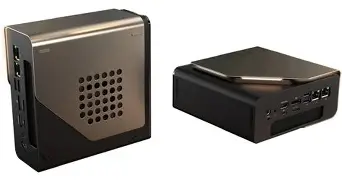
- A home office user can connect keyboard, mouse, webcam, headset, printer, and external storage without immediately needing a hub.
- A developer can drive multiple displays and still keep high-speed ports available for SSDs and peripherals.
- A power user can take advantage of faster wired networking or more advanced expansion paths than budget mini PCs usually allow.
The inclusion of features like USB4 and OCuLink makes the Evo T1 especially interesting. OCuLink is not something mainstream buyers demand by name, but enthusiasts and advanced users know its appeal: it opens the door to external GPU setups with less compromise than many USB-only approaches. That means a user can keep the machine small for daily work, then add more graphics performance later if needs evolve.
For a mini PC, that kind of flexibility is significant. It changes the ownership story from “buy it for what it is today” to “buy it for what it could still become in a year or two.”
Detailed Product Analysis: Where the Evo T1 Shines and Where It Does Not
1. Productivity and Office Work
For standard productivity tasks, the Evo T1 is comfortably overqualified. That is not a criticism. It means the system should feel fast and composed for years in email, browser-heavy work, video conferencing, spreadsheets, business apps, and multi-monitor setups. Buyers who care about responsiveness more than raw gaming performance will likely be pleased.
2. Development and Technical Work
This is one of the clearest use cases. Developers often care about CPU strength, memory capacity, storage speed, external display support, and networking. The Evo T1 checks those boxes well. It can serve as a compact coding machine, a local test box, or even a light home lab node. The ability to fit substantial RAM and multiple SSDs makes it more serious than the average living-room mini PC.
3. Content Creation
Photo editing, light-to-moderate video work, and asset management are realistic fits, especially for creators who prioritize a compact setup and efficient multitasking. The integrated graphics are capable for many creator workflows, but buyers doing heavy professional-grade video effects, advanced 3D rendering, or GPU-intensive pipelines should be realistic: a dedicated desktop GPU still changes the equation.
4. Gaming
This is where expectations need careful management. The Evo T1 is not a gaming-first machine. Its integrated graphics can handle lighter and more optimized titles, indie games, older games, and casual play better than many past mini PCs. But buyers chasing consistently high-end modern AAA gaming performance should not treat it like a substitute for a dedicated gaming tower. The good news is that external GPU potential gives it a stronger upgrade path than many compact competitors.
5. Noise and Thermals
Every powerful small computer faces the same challenge: heat density. The Evo T1 generally appears to manage sustained performance better than many undersized systems, but that does not mean it runs cool in every scenario. Under heavier loads, heat and fan activity become part of the experience. For buyers who use headphones, work in active office spaces, or prioritize performance over silence, this will probably be acceptable. For those seeking a whisper-quiet machine under all conditions, it may be a compromise.
Shop the latest Laptops & Computers picks on Amazon.
View Offers →6. Upgradability
This is one of the strongest arguments in favor of the Evo T1. A mini PC that supports substantial RAM and multiple internal SSDs is easier to justify at a higher price. Buyers do not feel locked into a single frozen configuration. That makes the machine more attractive to long-term owners, technical users, and anyone who likes to tune systems around changing needs.
Pros and Cons
Pros
- Strong everyday and professional performance for multitasking, coding, office work, and creator-focused tasks
- Compact footprint that dramatically improves desk space compared with towers or permanently docked laptops
- Excellent expandability for a mini PC, including generous RAM and storage potential
- Modern connectivity with fast ports, multi-display support, and advanced expansion features
- Useful for serious users, not just casual browsing or media playback
- Potentially longer service life thanks to upgrade-friendly internals
Cons
- Not ideal for buyers seeking premium all-metal design or luxury hardware aesthetics
- Thermals and fan noise can become noticeable during sustained demanding workloads
- Integrated graphics are not a replacement for a full gaming desktop GPU
- Likely more expensive than entry-level mini PCs, which may push it out of reach for casual users
- Overkill for simple tasks like streaming, light browsing, and occasional document work
Comparison Table: Is the Evo T1 the Right Kind of Mini PC?
| Buyer Type | How the Gmktec Evo T1 Fits | Best Outcome | Main Concern |
|---|---|---|---|
| Office professional with multiple monitors | Very strong fit | Smooth multitasking and clean desk setup | May cost more than needed for basic office work |
| Developer or engineer | Excellent fit | Fast builds, strong multitasking, upgrade flexibility | Fan noise under sustained load |
| Content creator | Good fit | Compact workstation for editing and asset workflows | Heavy GPU workloads may still need more graphics power |
| Casual home user | Moderate fit | Very fast and future-ready everyday PC | Likely overpowered for simple needs |
| Dedicated gamer | Situational fit | Acceptable light gaming or expandable setup | Not a true replacement for a gaming desktop without eGPU help |
| Home lab or prosumer tinkerer | Excellent fit | Flexible storage, strong CPU, compact deployment | Thermal behavior matters in always-on scenarios |
What Buyers Typically Care About Most
When evaluating a machine like this, most buyers are not just asking whether it is fast. They want to know whether it is worth replacing a laptop or desktop with. The answer depends on the use case.
If the goal is a cleaner workstation, the Evo T1 performs well. It reduces clutter while keeping far more capability than a basic mini PC.
If the goal is long-term ownership, its upgrade path makes it more attractive than many sealed alternatives. Buyers who have been burned by soldered memory or limited storage options will see this as a major plus.
If the goal is silence, the answer is more nuanced. The Evo T1 can be civilized in lighter use, but power in a small enclosure always creates thermal realities.
If the goal is gaming, it is best viewed as a capable compact computer with gaming possibilities, not as a gaming-first machine.
If the goal is replacing a work laptop used mostly at a desk, it may actually be one of the most convincing use cases. Many people pay for laptop portability they barely use. A strong mini PC paired with a proper monitor, keyboard, and webcam can be a better daily setup.
Buying Guide: Who Should Buy the Gmktec Evo T1 Mini Pc?
Buy It If:
- You want a small but serious desktop replacement
- You regularly work across multiple applications and multiple monitors
- You value RAM and storage upgrade flexibility
- You need a compact system for coding, office productivity, creative work, or technical projects
- You appreciate having room to grow through fast I/O and advanced expansion options
Think Twice If:
- You only use a PC for web browsing, streaming, and light schoolwork
- You want a machine that stays near-silent under all conditions
- You expect desktop-class high-end gaming without additional graphics help
- You are shopping strictly for the lowest price possible
Questions to Ask Before Buying
- How many displays need to be connected?
- Will the system be used for office work, creative work, coding, or gaming?
- Is future storage expansion important?
- Does the user prefer compact convenience or absolute silence?
- Would a cheaper mini PC already cover the real workload?
Those questions matter because the Evo T1 is best bought intentionally. It is not compelling simply because it is small. It is compelling because it combines a small footprint with unusually serious capability.
Conclusion
Switching to the Gmktec Evo T1 Mini Pc tends to confirm something many buyers suspect but do not fully trust until they experience it: a mini PC can, in fact, replace a far larger machine without feeling like a downgrade. The biggest payoff is not just reclaimed desk space, but the sense that the system remains ready for real work. It handles the kinds of modern workloads that matter to professionals and demanding home users, while offering more internal flexibility than many compact alternatives.
It is not perfect. Buyers have to accept the normal realities of high performance in a small chassis, especially when it comes to heat and noise under pressure. And it is not the cheapest path to a capable computer. But for users who want a compact workstation, a polished home office centerpiece, or an upgrade-friendly mini PC that feels more substantial than the average small-form-factor box, the Evo T1 makes a persuasive case. For the right buyer, switching to it does not feel like downsizing. It feels like refining the entire setup.