Should You Upgrade from Seagate Exos Mozaic M 30Tb Hard Drive to Psylo Browser?
At first glance, the question reads like a category error: a Seagate Exos Mozaic M 30Tb hard drive is high-capacity physical storage, while Psylo Browser is a piece of software for accessing the web. Yet this question captures a real decision many laptop and workstation buyers now face: whether to continue prioritizing local, high-density storage for files and media, or to shift workflows toward browser-first, cloud-enabled tooling where the browser becomes the primary workspace. This article compares the two approaches, examines real-world use cases, and offers a practical buying guide so readers can decide whether to keep, supplement, or move away from a 30TB local drive toward a browser-centric setup such as Psylo.
Understanding what each product represents
Seagate Exos Mozaic M 30Tb Hard Drive — what it delivers
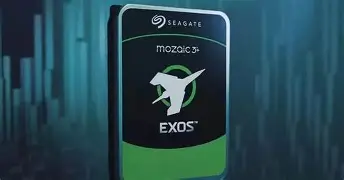
The Seagate Exos Mozaic M 30Tb is positioned as a high-capacity storage device intended for heavy-duty storage needs: archival repositories, media libraries, on-premise backups, and cold-storage arrays. Buyers typically choose a drive like this when capacity, cost per terabyte, and long-term retention are primary concerns. Such drives are used in NAS enclosures, media servers, and enterprise racks where large sequential reads and writes matter more than low latency.
Psylo Browser — what a browser-first tool aims to deliver
Psylo Browser (as a representative of modern privacy- and productivity-oriented browsers) is more than a simple web renderer. It can be a platform for web apps, encrypted sync, tab and session management, and integration with cloud storage and collaboration services. For many people, the browser is the primary environment for email, document editing, streaming, and collaborative work. Psylo and similar browsers emphasize cross-device continuity, low-friction sharing, and built-in privacy controls.
Why the question arises: use-case-driven decisions
Buyers considering an “upgrade” from a 30TB drive to a browser-first model are really weighing two approaches:
- Keep and rely on local, high-volume capacity for large files, offline access, and single-point control.
- Shift to a cloud/browser-centric workflow that reduces reliance on local storage by streaming, syncing, and using web-native applications.
Typical concerns that motivate this decision include cost and total cost of ownership, performance for specific workloads, data sovereignty and privacy, offline vs online work patterns, and how often files need to be accessed or shared.
Detailed comparison and analysis
The following analysis looks at the practical strengths and weaknesses of each approach across the things buyers typically care about.
Storage capacity and scalability
Seagate Exos M provides huge local capacity in a single device. For users with massive media libraries, raw datasets, virtual machine images, or multi-year backups, a 30TB drive is straightforward: plug it in, and the space is available without subscription fees. Scaling up locally means adding more drives or upgrading to larger arrays, which is a predictable capital expense.
Psylo Browser, by contrast, depends on cloud storage or web services for large file hosting. Scalability here is elastic — users can increase storage through subscriptions or connected services. The trade-off is recurring cost and dependence on third-party providers and network bandwidth.
Performance and access patterns
For sequential transfers (large video files, bulk archives), a local Exos drive can deliver consistent throughput and predictable latency. When editing large video timelines or working with locally hosted datasets, local disk I/O often outperforms uploads/downloads to cloud storage unless a high-speed network is available.
In a Psylo-driven workflow, many interactions are lightweight (documents, email, collaborative editing) and optimized for low-latency responses. However, operations that require transferring multi-gigabyte files are bounded by internet uplink speeds and cloud provider throttles. The browser can cache and stream content, but full local processing of large data still benefits from local drives.
Shop the latest Laptops & Computers picks on Amazon.
See Deals →Reliability, backup, and longevity
Enterprise-class drives like the Exos series are engineered for long retention and sustained operation. They are subject to hardware failure risks (mechanical faults, controller failures) but can be protected with RAID, replication, and offline vaulting. That protection is manual and under the owner’s control.
With Psylo and cloud-backed workflows, redundancy is often handled by the service provider, with geographic replication and managed backups. That shifts responsibility but introduces trust dependencies: the user must rely on the provider’s SLAs, privacy assurances, and export/import capabilities.
Privacy, security, and control
Local drives offer direct control over encryption, physical security, and access policies. No third-party has jurisdiction over the data unless the user chooses to upload it. This is crucial for regulated data, proprietary media assets, and situations where legal or compliance constraints prevent cloud storage.
Psylo Browser may include end-to-end encrypted sync and strong privacy features, but storing primary copies in third-party clouds increases the attack surface and legal exposure. The browser can help in protecting credentials and providing secure sessions, but the underlying data policies of the cloud storage providers remain relevant.
Mobility and collaboration
A 30TB drive is inherently stationary or cumbersome to transport. It’s excellent for centralized storage but poor for mobile workflows unless paired with networked access or remote desktop solutions.
Psylo excels at mobility: synced tabs, bookmarks, web apps, and cloud documents make it easy to continue work across devices. For teams that collaborate in real time, browser-first tools often accelerate workflows and reduce friction associated with file transfer.
Pros & Cons
Seagate Exos Mozaic M 30Tb — Pros & Cons
- Pros: Massive local capacity without recurring fees; predictable throughput for large sequential I/O; full physical control over data; suitable for archival and media libraries; one-time capital expense for capacity.
- Cons: Physical failure risk without redundant systems; maintenance and power costs; limited mobility; scaling requires new hardware purchases; not ideal for real-time remote collaboration without additional infrastructure.
Psylo Browser — Pros & Cons
- Pros: Streamlined cross-device workflows; integrates with cloud storage and web apps; excellent for collaboration and lightweight productivity; often includes privacy and sync features; reduces dependence on large local drives for routine tasks.
- Cons: Dependence on internet connectivity and cloud provider policies; recurring storage and subscription costs for large volumes; may not be practical for multi-terabyte local datasets; security and privacy depend on implementation and service contracts.
Side-by-side comparison
| Attribute | Seagate Exos Mozaic M 30Tb | Psylo Browser (browser-first) |
|---|---|---|
| Primary role | Local mass storage for files and archives | Workspace for web apps, synced data, and collaboration |
| Best for | Large media libraries, backups, on-premise archives | Document collaboration, streaming, cross-device workflows |
| Access speed (large files) | Typically faster and predictable for local transfers | Depends on network; streaming ok, large uploads slow |
| Offline access | Full access offline | Limited for cloud-dependent files; some caching possible |
| Scaling | Scale by adding drives (capital expense) | Elastic scaling via cloud (operational expense) |
| Privacy & control | High — local physical control | Varies — depends on encryption and provider |
| Mobility & collaboration | Poor without remote access tools | Excellent — built for cross-device work |
| Total Cost Model | One-time capital cost, ongoing power/maintenance | Recurring subscription and storage costs |
Real-world scenarios and recommended approach
Scenario 1: Video production studio with terabytes of footage
A post-production house that regularly edits multi-terabyte video projects benefits from local drives for raw footage and cache files. A Seagate Exos Mozaic M 30Tb or a RAID array delivers the necessary throughput and straightforward backup procedures. Psylo can assist with project management, review links, and collaboration, but the primary storage remains local.
Scenario 2: Hybrid remote team using shared documents and lightweight assets
Teams that work primarily in documents, spreadsheets, and small media files are excellent candidates for a Psylo-led workflow. The browser’s sync and web apps reduce the need for large local storage, and real-time collaboration improves productivity. A small local drive for OS and caches is fine; no massive drive is required.
Scenario 3: Research lab with large datasets and regulatory constraints
When datasets are massive and governed by strict compliance requirements, local storage is often necessary. An Exos drive under institutional controls ensures compliance and auditability. Browser-based tools can layer on collaboration and visualization, but primary storage remains on-premise.
Looking for the best Laptops & Computers deals on Amazon?
Browse Now →Scenario 4: Content consumer who streams and stores a small offline library
For a user who consumes streaming media, uses web apps, and only needs limited offline storage, Psylo and cloud storage are sufficient. A modest local drive suffices for caches and occasional downloads; a 30TB drive would be overkill.
Buying guide: How to choose what’s right
Deciding whether to retain a Seagate Exos Mozaic M 30Tb, adopt a Psylo-centric workflow, or combine both comes down to a structured evaluation. Below is a checklist and guidance.
Checklist — must-answer questions
- How much data is in active use versus archived? (Active files justify faster or cloud workflows.)
- What are the average file sizes and typical I/O pattern? (Large sequential files favor local drives.)
- How often must files be accessed remotely or shared simultaneously by multiple people?
- Is reliable, high-bandwidth internet available for uploads/downloads?
- What are the privacy, legal, or compliance constraints on where data is stored?
- What is the preferred cost model: one-time capital expense or recurring operational expense?
- Is mobility essential (work across devices, travel) or is stationary storage acceptable?
Decision guidance
If the answers prioritize large, active datasets, offline access, cost-per-TB efficiency, or strict control, local high-capacity drives are appropriate. If collaboration, cross-device continuity, real-time editing, and reduced hardware management are higher priorities, a browser-first approach like Psylo with cloud storage integration is attractive.
Hybrid approach recommendations
Most modern buyers benefit from a hybrid model that uses both local high-capacity drives and browser/cloud workflows:
- Keep a local Exos or similar drive for primary large datasets, backups, and archival snapshots.
- Use Psylo for active collaboration, document editing, email, and web-based tools that accelerate daily productivity.
- Implement a tiered storage policy: hot data on local SSDs or NAS arrays, warm data in cloud object storage, cold archives on the 30TB drive.
- Ensure at least one off-site backup copy: a cloud snapshot or physically rotated drives stored securely.
Migration tips if moving toward Psylo/browser-first
- Audit data: identify what must remain local, what can be archived, and what can move to cloud.
- Prioritize upload by active project and least-resistance bandwidth windows (e.g., overnight or weekend bulk transfers).
- Encrypt sensitive data before uploading and enable provider-side encryption and two-factor authentication for accounts accessed through Psylo.
- Keep local backups until cloud integrity and restore procedures are verified end-to-end.
- Train collaborators on new workflows and establish versioning and retention policies in the cloud environment.
Practical cost considerations
One-time cost for a 30TB drive is attractive compared with recurring cloud storage fees when storing multiple terabytes for years. However, running an on-premise solution includes power, cooling, redundancy (RAID, backup drives), and management overhead. Conversely, cloud and browser-based approaches convert capital cost into predictable monthly costs and offload maintenance to the provider but can accumulate significant expense over time — especially for infrequently accessed archival data.
Estimate both direct costs and indirect costs (administration time, bandwidth upgrades, downtime risk) when comparing the two models over a 3- to 5-year horizon.
Conclusion
The short answer: it’s rarely a binary choice. A Seagate Exos Mozaic M 30Tb hard drive and a modern browser like Psylo serve different primary functions and often complement each other. For users whose workflows depend on very large local datasets, strict data control, or offline accessibility, keeping the Exos drive is the pragmatic choice. For those prioritizing mobility, collaboration, and browser-native workflows, Psylo enables a more streamlined experience that reduces the need for massive local storage.
Most buyers will find the best outcome in a considered hybrid strategy: retain local high-capacity storage for archival and heavy-duty tasks while adopting Psylo and cloud services for day-to-day productivity, real-time collaboration, and cross-device continuity. This approach balances cost, performance, control, and convenience without forcing a full and risky migration away from either model.